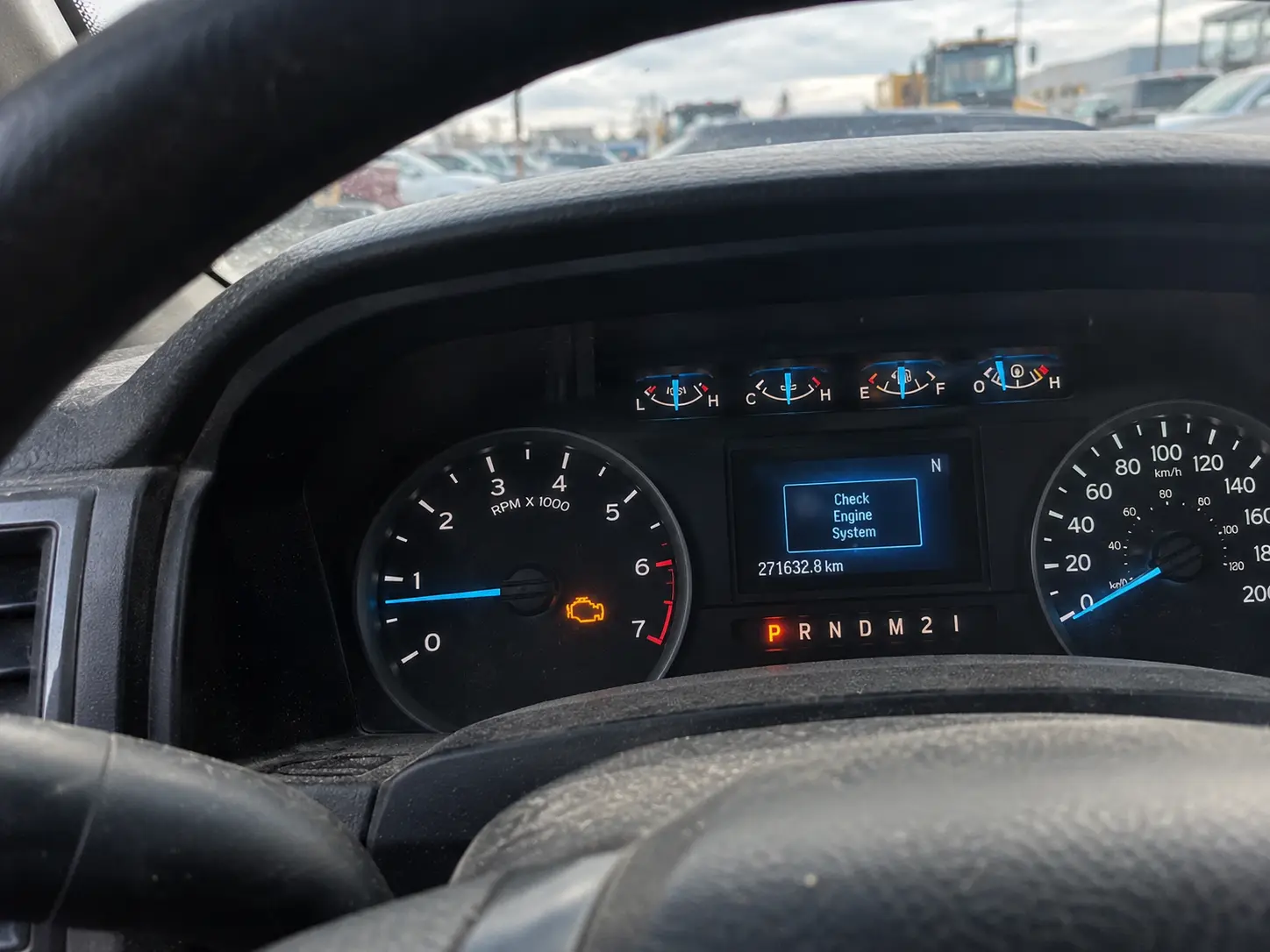


A blown engine leaves four paths open: replace it, rebuild it, fit a used one, or let the car go. Each looks sensible on its own, and shops quote them in different formats, so comparing them across a service counter is harder than it should be. The stakes are real: choosing on price alone is how people end up paying for a second engine, or selling a good car for scrap value after hearing the first number.
Below, the four paths are compared on cost, risk and what the car is still worth, along with the one question to settle before any money changes hands.
Get a Quote
There’s no charge for towing, and cash or an e-transfer reaches you before the car leaves. Lines at (587) 355-1650 are open daily from 7 AM until 8 PM. You can also email hello@cochranecarbuyers.ca. Set our figure beside the repair quote and choose the better of the two.
Why Did the Engine Fail, and Why Does That Decide Everything Else?
The cause of failure decides whether a replacement is a fix or just a delay, because a new engine inherits whatever killed the old one if nobody corrects it. Most seized or blown engines trace back to a short list of causes, and each calls for a different check before a swap:
| Likely cause | What it points to | Check before a swap |
|---|---|---|
| Low or starved oil | Missed oil changes, a leak or a failing oil pump | Whether the oil system was repaired, plus the service records |
| Overheating | A cooling system fault | Radiator, thermostat, hoses and any coolant loss |
| Water in the engine | Driving through standing or moving water | The air intake path, and whether an insurance claim applies |
| Plain wear or a broken part | High mileage or a weak point on that model | Whether the same failure is common on that engine |
Tell the mechanic where and how it failed, whether that was a cold snap, a long haul up Highway 22 or a stretch of towing. The conditions help pin down the cause.
How Much Does Engine Replacement Cost in Alberta, and Is the Car Worth It?
A basic engine replacement in Alberta can land anywhere from $5,000 to $10,000 or beyond, and the engine replacement cost vs car value comparison decides whether that money is well spent. Treat that as a planning range for a basic swap, not an Alberta-wide average or a quote for your car. A written Alberta quote for your exact vehicle is the only number that counts.
Next, match the quote to the car. Double the quote to find the car value at which the bill is half of it, and triple it to find the value at which the bill is a third. A $5,000 bill is half of a $10,000 car, and a $10,000 bill is half of a $20,000 one.
That’s where the rough $15,000 guide comes from: a mid-range $7,500 quote is half the value of a $15,000 car and a third of a $22,500 one. It’s only a guide. A cheaper car with a sound body can justify a swap if a comparable car would cost more to buy, and a pricier one may not justify a very large bill.
What Pushes a Quote Toward the Top of the Range?
The engine type does most of the work. Turbocharged, diesel and European engines can cost well above a common gasoline four-cylinder. Labor and the parts that go in alongside the engine, such as gaskets and cooling parts, add to the total, and so does fixing whatever caused the failure in the first place. A diesel pickup used around a Rocky View County acreage tends to sit near the top of any range, while a compact commuter car sits near the bottom.

Should You Fit a Used, Remanufactured or Rebuilt Engine?
A used engine suits a tight budget on an older car, a remanufactured engine suits an owner planning to keep the car for years, and rebuilding your own engine only makes sense when the damage is limited. The right pick comes down to the car’s age and how many more years you want from it.
| Option | What it is | Usual price position | Main catch |
|---|---|---|---|
| New or crate engine | A factory-new or new-built unit | Highest | The cost can outrun the car's value |
| Remanufactured | Rebuilt to a set standard, usually at a plant | Middle to high | Warranty terms vary by seller |
| Used (salvage) | Pulled from another vehicle | Lowest up front | Unknown history, short or no warranty |
| Rebuild of your own engine | Your engine repaired and reassembled | Varies with the damage | Only works if the main components survived |
When Does a Used Engine Make Sense?
A used engine is the cheapest way back on the road because it comes from another vehicle, often a wreck. The catch is the unknown: nobody can vouch for how it was treated. Ask the seller for the donor car’s kilometers if they have them, what the warranty covers and who pays labor if the engine fails inside that period. A cheap engine with no labor coverage can turn into a second installation bill, which is how a bargain ends up costing more than a remanufactured unit would have.
Where Does a Rebuild Fit In?
Rebuilding the engine you already have can work when the damage is contained and the main components survived, but a mechanic has to open it up to find out. Severe damage often spreads across several components, which makes partial repairs unreliable and is why mechanics often recommend a replacement instead. If a rebuild is on the table, ask for the teardown findings in writing and for the warranty that comes with it.
Whichever route you choose, the paperwork should name it. AMVIC, the industry regulator, says repair shops must put the parts they install in writing, including where each part comes from and whether it’s new, used or reconditioned. The regulation also stops a business from swapping used, rebuilt or salvaged parts in for new ones without your knowledge and prior consent. “Rebuilt” and “remanufactured” get used loosely, so ask the shop to define them.
Will Insurance or a Warranty Pay for a Blown Engine?
Usually not when the engine failed from wear, overheating or missed maintenance, because car insurance is built around crashes and certain events such as fire or flooding, not mechanical breakdown. Policies differ, so if a collision, flood or fire may have played a part, call your insurer before you authorize any work.
Some insurers sell optional mechanical breakdown coverage, so check whether you added it. If the car is still inside a factory powertrain or extended warranty, contact the provider first, because approval rules vary and starting the repair on your own can put coverage at risk.
What Should the Estimate Say Before You Approve an Engine Job?
It should name the engine type, the warranty and a firm total in writing, because Alberta limits how far a shop can overshoot an estimate: per AMVIC, the final bill can top it by no more than 10 percent, capped at $100, and anything beyond that needs your agreement before the work starts. Before approving, get answers to these:
- Which engine is going in, and who backs its warranty?
- What caused the failure, and what has been done about it?
- What else did you see that will need work in the next year?
- What’s the total with tax and extras, and what could change it?
- What does the warranty cover and exclude, in months and kilometers?
That third question often matters more than the quote itself. A car tired enough to lose an engine often has other big repairs close behind, and a mechanic who has had the car apart will usually tell you if you ask plainly. On larger repairs, AMVIC also recommends getting a second shop’s price.
What Is a Car With a Dead Engine Still Worth?
A car with a dead engine is still worth real money when the body, transmission and interior are sound, because those parts have buyers, but the value falls quickly as the car gets older or rougher. Buyers look at the year and model, the condition of the body and frame, the transmission and drivetrain, and the pieces that tend to go missing from stripped cars, such as the catalytic converter, wheels and electronics.
That last point matters. A stripped car is worth much less than a complete one, so leave everything on it until you’ve compared offers. A private sale can net more, but it costs weeks of listings and honest explaining about what’s wrong. And on a late-model car with a fixable failure, a good independent shop’s quote can beat any offer from a buyer like us, in which case you should take the repair.
When Is It Time to Let the Car Go?
It’s time to consider letting the car go when the engine bill eats up roughly half the car’s running value, the shop has found more problems, or the frame has rust you can’t ignore. None of those is a hard rule, and one on its own doesn’t settle it. Together they tip the decision.
The opposite case is real too. A young, sound car with a failure that has an identifiable cause, and that cause fixed, can make a replacement the cheapest way to keep a car you trust. The Repair or Sell page runs the engine replacement cost vs car value arithmetic with your own figures. Also remember that a repair won’t automatically add its cost to the car’s resale value, so plan on getting back less than you spend.
Who Buys a Car With a Dead Engine in Cochrane?
If the numbers point toward selling, Cochrane Car Buyers collects from anywhere in town and out to 45 km, and an engine that won’t turn doesn’t change that. Tell us the year, make, model and what failed, and we’ll give you a firm figure. The steps are laid out on our page for cars with mechanical problems.
Get a Quote
There’s no charge for towing, and cash or an e-transfer reaches you before the car leaves. Lines at (587) 355-1650 are open daily from 7 AM until 8 PM. You can also email hello@cochranecarbuyers.ca. Set our figure beside the repair quote and choose the better of the two.
What Questions Come Up Most About a Blown Engine?
Does car insurance cover a blown engine?
Not usually, since car insurance generally doesn't pay for engine failure from wear or missed maintenance. A crash, fire or flood that damaged the engine is a different case, and policies vary, so ask your insurer before authorizing any repair work.
What's the cheapest way to replace a blown engine?
A used engine is usually the cheapest up front, with a remanufactured one costing more and a new one the most. The saving can vanish if the used unit fails early and the warranty doesn't cover labor, so check what the coverage includes before choosing on price alone.
Should you replace the engine in a car with over 200,000 km?
Only if the body and drivetrain are in good shape and the bill is small next to the car's running value. At that distance other big parts can be close behind, so ask the mechanic what else turned up while the engine was out.
Do I have to be told if the replacement engine is used?
Yes. AMVIC's guidance calls for written details on installed parts, including whether they're original equipment or from another source and whether they're new, used or reconditioned. A shop also can't swap used, rebuilt or salvaged parts in for new ones without your knowledge and prior consent.
Will anyone buy a car with a blown engine?
Yes, since the body, transmission and other parts still have value to buyers. The price depends on the year, the condition and whether the car is still complete. Line up a firm as-is figure against any private offer and the repair quote before deciding.
What's the Short Version for a Blown Engine?
Find the cause first, because it decides whether a new engine is a fix. Then line up the engine replacement cost vs car value, using a written quote for your own car and a realistic idea of what the car is worth running. If the car clears the bar and the failure is understood, a swap deserves a serious look. If it doesn’t, a dead engine still leaves a car with value, so compare an as-is offer before you spend anything.
References
- Alberta Motor Vehicle Industry Council. Repairing a vehicle.
- Alberta Motor Vehicle Industry Council. Service and repair: know what you’re signing.
- Alberta Motor Vehicle Industry Council. Repair estimates and authorizations: what you need to know.
- Government of Alberta. Automotive Business Regulation, Alta Reg 192/1999, via CanLII.