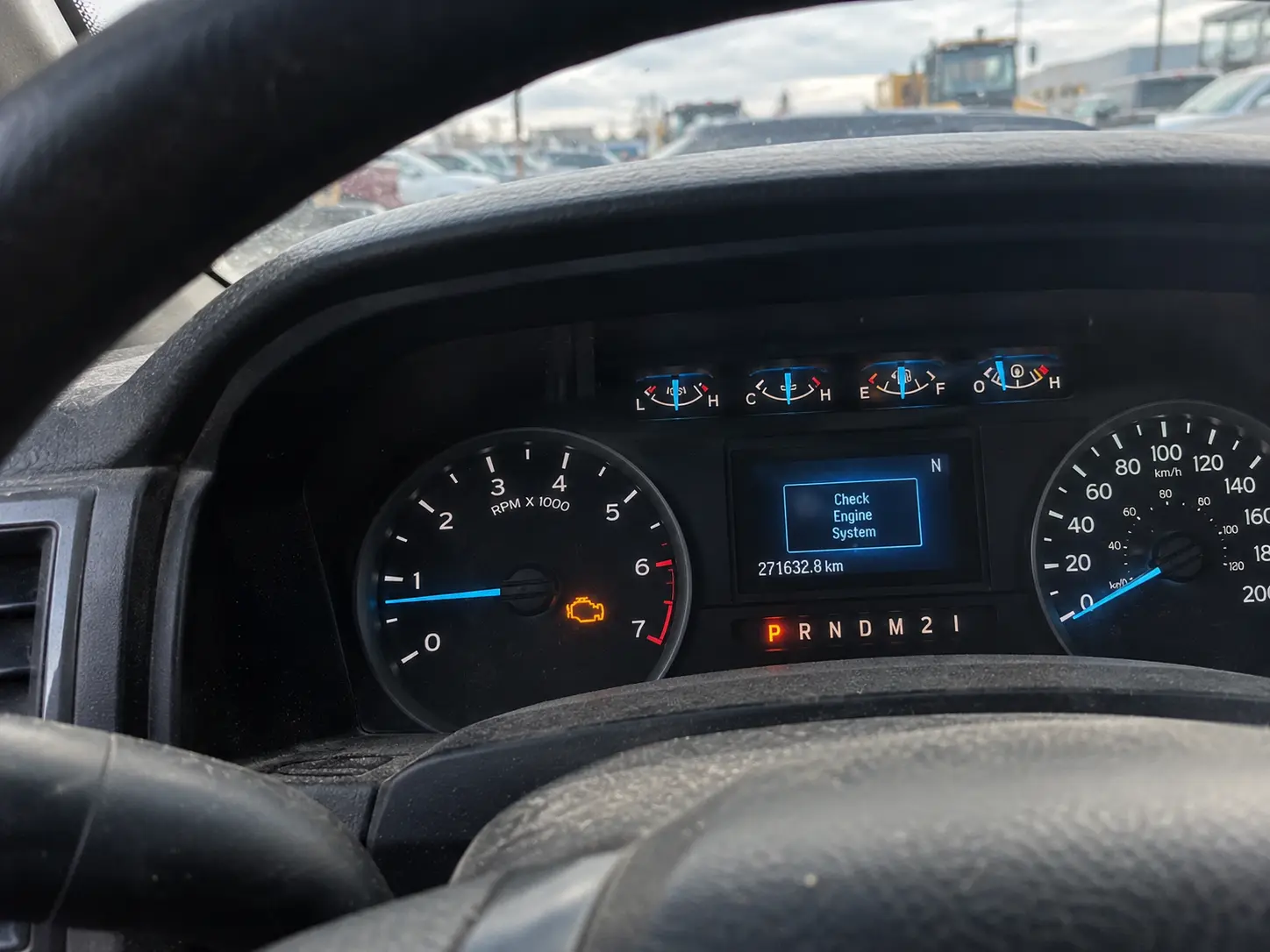


A failed transmission is one of the few repairs that can cost more than half of what the whole car is worth. In Alberta, a replacement commonly runs $3,500 to $7,000 or more, and the quote can land without warning. Online price pages rarely say which market they cover, and the Highway 1A commute stacks up kilometers fast, so a newish Cochrane car can carry an older car’s wear. That matters since the repair-or-sell decision rests on three figures: the repair price, the car’s value and its remaining life. Get one wrong and thousands go to the wrong place.
In this guide we cover the Alberta price range, why many mid-2010s CVTs have a bad reputation, and a simple test for whether the repair is worth making.
What Happens If You Decide to Sell a Car With a Bad Transmission?
Cochrane Car Buyers is based in town and buys vehicles in any condition, including ones that won’t move under their own power. The process for selling a car with mechanical problems is short: describe the car, get a firm number, and if you accept, towing within 45 km is free and you’re paid before the car is loaded.
Call (587) 355-1650 any day between 7 AM and 8 PM. Put that number next to your written repair estimate and go with whichever is better for you.
How Much Does a Transmission Replacement Cost in Alberta?
A common automatic transmission replacement in Alberta runs roughly $3,500 to $7,000, and a CVT runs $4,000 to $8,000. Some European models cost more than either range. Those are indicative installed prices, labor included, not Alberta-wide averages and not a quote for any one vehicle, so treat them as a starting point before a shop puts a number on yours in writing.
| Transmission type | Typical Alberta replacement cost | Why it lands where it does |
|---|---|---|
| Conventional automatic | $3,500 to $7,000 | Make and model, plus whether the unit is new, remanufactured or used |
| CVT | $4,000 to $8,000 | Units cost more to source, and fewer shops are set up to work on them |
| Some European makes | Can run above both ranges | Pricier units and parts, and it varies by model and unit type |
The transmission replacement cost Alberta drivers see on a written estimate usually splits into three parts: the unit itself, the labor to swap it, and the extras that go with it. The unit is normally the biggest piece, and the one that swings the most from shop to shop.
What Does a New, Remanufactured or Used Unit Change?
The type of unit moves the bill more than anything else on the estimate. A new factory unit costs the most. A remanufactured unit has been rebuilt to specified standards and may carry a warranty from the supplier, the remanufacturer or the installer, which makes it the common middle ground. Confirm who backs that warranty, how long it runs, its kilometer limit and what it excludes. A used unit from a salvage yard is cheapest up front but carries the most risk, since nobody can say how hard the original life was. Ask which one a quote includes before comparing two shops.
What Should a Transmission Quote Include?
Two quotes that look $800 apart often aren’t pricing the same job. Before comparing them, check that each one spells out:
- The unit type. New, remanufactured or used, and who built it.
- The torque converter and cooler. Whether they’re replaced or flushed, because contamination left in the cooler lines can threaten a fresh unit.
- Fluid and any programming the car needs after the swap.
- The warranty, in months and kilometers, plus what voids it.
- Tax and shop fees, so the total on paper is the total you’ll pay.
Why Are Mid-2010s CVTs Failing in So Many Cars?
The cars that carried the first big wave of CVTs are now 9 to 13 years old, and the extended warranties that covered some of them have run out. That’s when the bill lands on the owner. Nissan is the best documented case in Canada, so it’s the clearest place to see how this played out.
A class action settlement covering Canada outside Quebec extended CVT coverage to 7 years or 140,000 km, whichever comes first, on the 2013 to 2016 Altima, the 2013 to 2017 Juke and Sentra, the 2012 to 2014 Versa and the 2014 to 2017 Versa Note. By this fall, the 7-year limit has passed on every model year in that list, and the window for claiming reimbursement of past repairs closed in 2022. Separately, the Automotive Protection Association, a Canadian consumer group, reported that its analysis of Nissan warranty and repair data from the Quebec class action showed a CVT failure rate of nearly 6 percent during the warranty period and shortly after. That’s the data examined in that case, not a failure rate for every Nissan CVT.
None of that means every CVT is a time bomb, or that every make has Nissan’s record. Plenty of CVTs run for years without trouble. The point is narrower: on a mid-2010s car, a CVT quote deserves a closer look than a conventional automatic would, because the top of the CVT range sits higher and the car’s value is often lower by now.
If yours is on that list, the extended coverage has expired, but a Nissan dealer can still check your VIN for any separate warranty, service campaign or goodwill assistance that might apply.

How Much Mileage Does a Cochrane Commute Add to a Car?
A Cochrane commute adds roughly 17,500 km a year on its own, so a commuter car can reach 140,000 km in about eight years and 200,000 km in about eleven, and sooner once weekends are added. The math is plain: downtown Calgary and back is about 70 km, and five days a week for 250 working days comes to 17,500 km before the car goes anywhere else.
| Yearly distance | What that looks like | Reaches 140,000 km | Reaches 200,000 km |
|---|---|---|---|
| 17,500 km | One downtown commute, five days a week, nothing else | 8.0 years | 11.4 years |
| 25,000 km | The same commute plus weekends, rink runs and Canmore trips | 5.6 years | 8.0 years |
| 35,000 km | Two long commutes on one car, or work that keeps you moving around Calgary | 4.0 years | 5.7 years |
Plenty of Cochrane drivers go less far than downtown, and some go farther. Transmission wear depends on mileage, maintenance history, operating temperature, towing and driving conditions, as well as the transmission itself. A long commute adds kilometers quickly, but the odometer alone can’t tell you how much useful life remains. Four things make it misleading in both directions:
- Highway driving isn’t a guarantee. Steady highway driving often means less stop-and-go than city driving, but it doesn’t promise low wear, so a commuter’s odometer isn’t a verdict either way.
- Towing and heat push the other way. Pickups and SUVs hauling horse trailers, hay or campers around Rocky View County and up Highway 22 work the transmission harder than the odometer shows, and a hot, strained transmission wears faster.
- Maintenance counts. Fluid condition and service history shape how much life is left, so ask for the records before judging a car by its kilometers alone.
- Coverage usually runs out on kilometers first. Warranties and extensions end at a set number of years or kilometers, whichever comes first. For a driver putting on 25,000 km or more a year, that’s almost always the kilometers.
When Does a Transmission Bill Pass Half the Car's Value?
As a rule of thumb, a transmission replacement gets hard to justify once the bill passes about half of what the car is worth in working order. The table below runs the two ends of the Alberta range against four car values, so you can see where your own car falls.
| Car's value, working | Half-value line | $3,500 quote | $7,000 quote |
|---|---|---|---|
| $6,000 | $3,000 | Over the line | Over the line |
| $10,000 | $5,000 | Under the line | Over the line |
| $14,000 | $7,000 | Under the line | At the line |
| $20,000 | $10,000 | Under the line | Under the line |
Set against the transmission replacement cost Alberta shops typically quote, any car worth less than $14,000 in working order crosses the line at a $7,000 quote, and any car worth less than $7,000 crosses it even at $3,500.
The half-value rule is a guide, not a law. A bill over half can still make sense on a car that’s otherwise reliable, especially if replacing it would cost far more. Mileage tightens the rule: at 200,000 km a car’s working value is lower, so the same quote crosses the line sooner, and a second big failure becomes more likely. Weigh the car’s remaining useful life, what a replacement vehicle would cost and the risk of further failures, and ask the shop plainly what else it saw that will need doing in the next year. The answer flips more of these decisions than the quote does.
Sometimes the repair is worth doing. A newer car with lower mileage, a sound body and one isolated failure is often a good repair candidate, and if that’s your car, the repair may well be the right call once the numbers check out. The Repair or Sell calculator runs this same test with your own numbers.
One catch to keep in mind: a repaired car doesn’t resell for what you spent on it. Buyers discount a car with a replaced transmission, so don’t count on getting the bill back when you sell.
What Should You Know About Alberta's Estimate Rules Before Approving the Work?
In Alberta, a licensed repair business has to give you a written estimate if you ask for one, and it can’t bill more than 10 percent, to a maximum of $100, above that estimate unless you agree to the additional work and cost. Those limits come from the province’s Automotive Business Regulation, which AMVIC oversees for businesses that repair or service vehicles.
A few habits at the counter put those rules to work:
- Ask for the estimate in writing. A shop only has to provide one when asked, so say so before the car goes on the hoist.
- Get the diagnostic ceiling. If the shop has to do diagnostic work before it can price the job, the estimate has to state the maximum it expects that work to cost.
- Authorize extra work before it starts. Consent should normally be in writing. If it can’t be, the business has to record details such as your name, the date and time, the work, the estimated cost and how you gave the go-ahead, whether by phone or email. Ask for the updated estimate and keep a copy.
- Get a second quote on a job this size. AMVIC, the industry regulator, recommends comparing prices on larger repairs. A quote from a Cochrane shop and one from a Calgary shop for the same type of unit shows you the spread.
Is Selling Better Than Replacing a Failed Transmission?
Selling tends to make more sense when the quote passes about half the car’s working value, when the odometer is past 200,000 km, or when the shop has flagged more work coming. The more of those that apply, the weaker the case for repairing.
Once the car is going, there are two realistic routes:
- Sell it privately, as is. A private buyer who likes working on cars may pay more than any company that buys cars for a living. The trade-off is time: listings, tire-kickers, and telling every buyer plainly what’s wrong with it.
- Sell it to a car buyer. You get a firm number, and a car that won’t move gets picked up without you arranging a tow.
What Happens If You Decide to Sell a Car With a Bad Transmission?
Cochrane Car Buyers is based in town and buys vehicles in any condition, including ones that won’t move under their own power. The process for selling a car with mechanical problems is short: describe the car, get a firm number, and if you accept, towing within 45 km is free and you’re paid before the car is loaded.
Call (587) 355-1650 any day between 7 AM and 8 PM. Put that number next to your written repair estimate and go with whichever is better for you.
What's the Bottom Line on Transmission Replacement Costs in Alberta?
The transmission replacement cost Alberta drivers should plan around is $3,500 to $7,000 for a common automatic and $4,000 to $8,000 for a CVT, with some European models higher. Run the half-value test on your own car, remember that a Cochrane commuter reaches high mileage years before the model year suggests, and get every number in writing before you approve the work. If the math favors repairing, repair it. If it doesn’t, you’ve lost nothing by checking.
What Else Do Cochrane Drivers Ask About Transmission Replacement?
Is it worth replacing a transmission on a car with 200,000 km?
Usually not, unless the rest of the car is sound and the quote is well under half its working value. At that distance the deciding question is what else is likely to fail within the year, so ask the shop what it noticed while the car was apart.
Can a shop charge more than its estimate in Alberta?
Only by 10 percent, up to a maximum of $100, unless you agree to a revised estimate. Alberta's Automotive Business Regulation sets that limit, so a shop that finds more work mid-job has to get your approval before billing for it. Keep the written estimate and any authorizations.
How much more does a CVT replacement cost than a regular automatic?
A CVT replacement usually costs more, roughly $4,000 to $8,000 against $3,500 to $7,000 for a common automatic. CVT units cost more to source and fewer shops work on them. Some European models run higher, so a written estimate for your exact vehicle beats any average.
Does a replacement transmission come with a warranty?
It depends on who installs it and which unit goes in. A remanufactured unit may be backed by the supplier, the remanufacturer or the installer, while a used unit often carries little or none. Get the backer, the length in months and kilometers, and the exclusions in writing before you approve the work.
Can you still sell a car with a failed transmission?
Yes, because buyers price in the repair or the value of the parts. Whether it brings more privately or from a car buyer depends on the car and on how much time you want to spend, so compare a firm as-is number against any private offer before you decide.
References
Alberta Motor Vehicle Industry Council. Service and repair: know what you’re signing.
Alberta Motor Vehicle Industry Council. Repair estimates and authorizations: what you need to know.
Government of Alberta. Automotive Business Regulation, Alta Reg 192/1999, via CanLII.
Merchant Law Group. Notice of Nissan CVT settlement in Canada, excluding Quebec (PDF).
Automotive Protection Association. APA update on Nissan CVT transmission failures.
Alberta Motor Vehicle Industry Council. Repairing a vehicle.